






About GAZYVA® Infusion Therapy
GAZYVA® (obinutuzumab) is a biologic medication known as a CD20-directed cytolytic antibody, given as an intravenous (IV) infusion. Like RITUXAN®, it works by removing B cells rather than releasing brakes on T cells. CD20 is a protein found on the surface of pre-B and mature B lymphocytes, and when obinutuzumab binds to it, the B cell is destroyed through several mechanisms: recruitment of immune cells that kill or engulf the cell, direct activation of death signaling pathways inside the cell, and activation of the complement cascade. GAZYVA® is a Type II antibody that was engineered with reduced fucose content, which in laboratory studies produces stronger immune-mediated killing and more direct cell death than rituximab. It is not interchangeable with rituximab or any rituximab biosimilar.
Every dose of GAZYVA® is 1,000 mg, which makes it simpler than RITUXAN® in one respect, since there is no weight or body-surface-area calculation. The schedule, though, is among the more intricate in this group, and it depends entirely on your diagnosis. For previously untreated chronic lymphocytic leukemia, the first dose is deliberately split across two consecutive days, 100 mg on day 1 and 900 mg on day 2, followed by 1,000 mg on days 8 and 15 of cycle 1 and 1,000 mg on day 1 of cycles 2 through 6, given as six 28-day cycles with chlorambucil. For follicular lymphoma, the dose is 1,000 mg on days 1, 8, and 15 of cycle 1, then 1,000 mg on day 1 of each remaining cycle, followed by 1,000 mg every two months for up to two years in patients who respond. For active lupus nephritis, the rhythm is different again: 1,000 mg on day 1, week 2, week 24, and week 26, then 1,000 mg every six months. That works out to four infusions in the first year and two a year after that.
Every patient is screened for hepatitis B before the first dose, and premedication is given before every infusion to reduce the risk of infusion reactions, along with hydration and medication to prevent tumor lysis syndrome for the cancer indications. GAZYVA® carries a boxed warning covering hepatitis B virus reactivation and progressive multifocal leukoencephalopathy. It is not given to patients with an active infection, and it cannot be given again to anyone who has had anaphylaxis or serum sickness with a prior dose.
Conditions treated by this therapy
GAZYVA® is FDA-approved across both blood cancers and autoimmune kidney disease. Your care team may consider this therapy if you have:
- Previously untreated chronic lymphocytic leukemia, in combination with chlorambucil
- Follicular lymphoma that relapsed after, or did not respond to, a rituximab-containing regimen, in combination with bendamustine followed by GAZYVA® alone for up to two years
- Previously untreated stage II bulky, stage III, or stage IV follicular lymphoma, in combination with chemotherapy followed by GAZYVA® alone in patients who achieve at least a partial remission
- Active lupus nephritis in adults who are receiving standard therapy, which typically means mycophenolate mofetil and a tapering course of corticosteroids
The lupus nephritis indication is the newest of the two sides of this label, and it makes GAZYVA® the only anti-CD20 antibody to show a complete renal response benefit in a randomized phase III lupus nephritis study. In the REGENCY trial, 46.4% of patients on GAZYVA® plus standard therapy achieved a complete renal response at week 76, compared with 33.1% on standard therapy alone.
Two points are worth knowing. The lupus nephritis indication is for adults only, and GAZYVA® has not been established as safe or effective in children for any indication, which sets it apart from RITUXAN®. And GAZYVA® is not interchangeable with RITUXAN®, RITUXAN HYCELA®, or the rituximab biosimilars, even though all of them target CD20. Our team will confirm with your prescriber which product is intended before your first visit.
GAZYVA® Price
The cost of prescription medications can vary depending on your insurance coverage. If you're concerned about the price of your medication:
- Contact your insurance provider to understand your coverage
- Ask your doctor or pharmacist about lower-cost alternatives
- Check with the drug manufacturer about financial assistance programs
- Explore patient assistance options if you're uninsured or underinsured
Remember, many resources exist to help patients access necessary medications. Don't hesitate to ask for help if you're struggling with medication costs. No patient should go without necessary treatment due to financial limitations. If you have questions about financial assistance opportunities, contact a member of our Violet Health team.

What to Expect During GAZYVA® Infusion Therapy
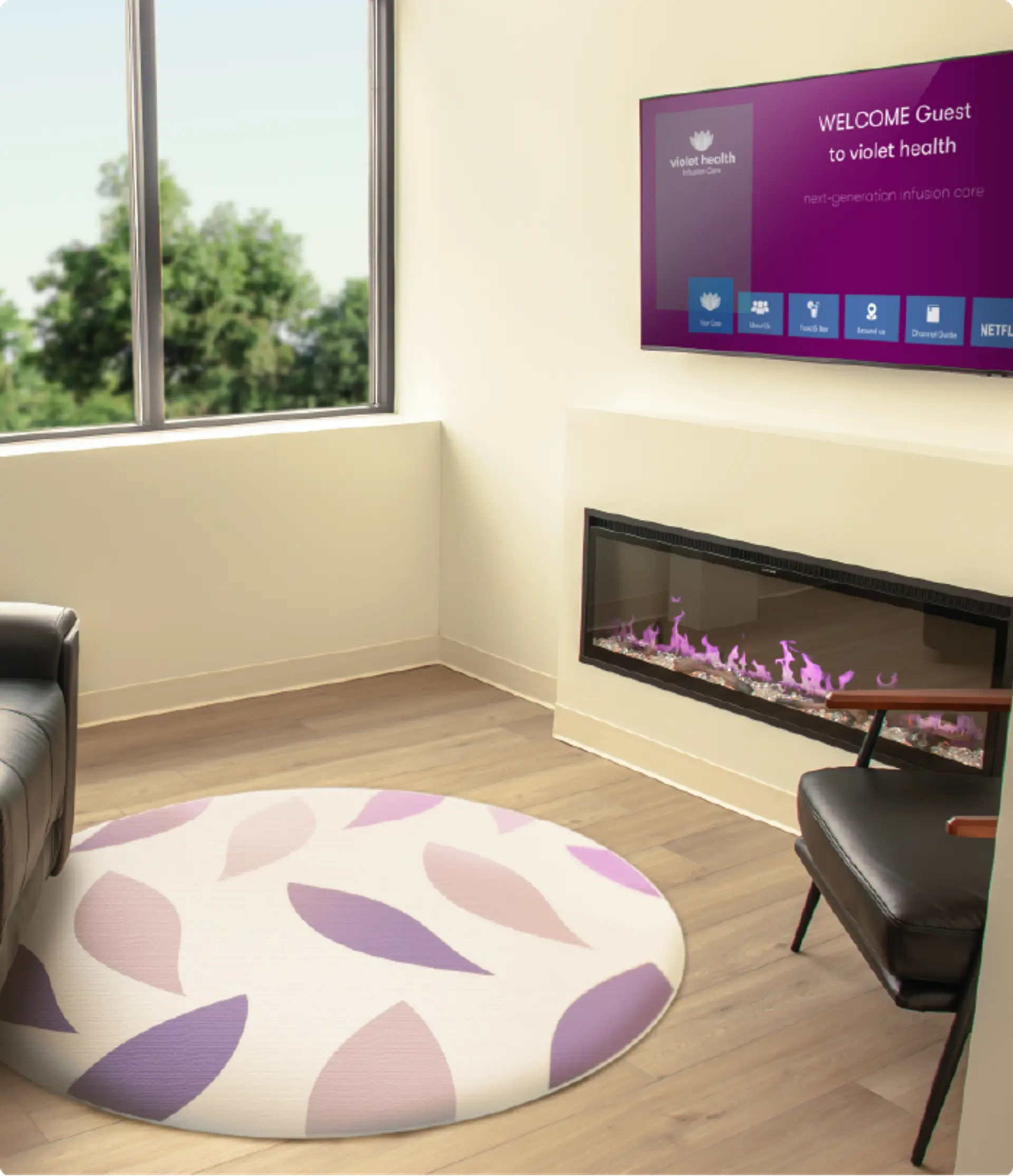
When you arrive at our Violet Health location, you'll settle into a private, welcoming space designed with your comfort and peace of mind in mind. Before and during your intravenous infusion, our experienced team will:
- Review your current health status and any signs of infection, since GAZYVA® is not given while an active infection is present
- Confirm your hepatitis B screening results, which are required before the first dose and monitored during treatment and for at least a year after
- Review your most recent blood counts, since low neutrophils and low platelets are both common with GAZYVA® and either one can delay a dose
- Check your kidney function and uric acid and confirm your tumor lysis prophylaxis, including IV fluids and medication such as allopurinol, if you are being treated for leukemia or lymphoma
- Give premedication before every infusion, typically a corticosteroid, acetaminophen, and an antihistamine, on a schedule that depends on which dose you are receiving
- Place your IV using gentle, practiced technique
- Start your first infusion slowly, at 50 mg per hour, increasing in 50 mg per hour steps every 30 minutes if you tolerate it, up to a maximum of 400 mg per hour
- Run later infusions faster, starting at 100 mg per hour and increasing in 100 mg per hour steps, with a shorter 90-minute option available from the second dose for eligible patients who did not have a significant reaction
- Monitor you closely for infusion reactions, slowing, pausing, or stopping the infusion depending on severity, and keep watching you afterward since reactions can appear within 24 hours
- Protect your privacy and comfort throughout the visit
Plan for a long day at your first infusion. Because the rate starts low and steps up gradually, that visit often runs four to six hours, and sometimes longer. If you are being treated for chronic lymphocytic leukemia, your first dose is split across two consecutive days, 100 mg on day one and 900 mg on day two, so expect two visits back to back at the start. That split exists specifically to reduce the chance of a severe first-dose reaction. GAZYVA® is given through its own line, never as an IV push or bolus, and it is not mixed with other medications. On chemotherapy days, GAZYVA® is generally given first.
Your schedule after the first cycle depends on your diagnosis. Leukemia patients complete six 28-day cycles. Follicular lymphoma patients complete six or eight cycles and then move to a maintenance infusion every two months for up to two years. Lupus nephritis patients follow a very different rhythm: two doses two weeks apart, two more at weeks 24 and 26, and then a single infusion every six months. Three things carry across all of them. Live vaccines are not given during treatment, and any vaccinations you are due for should be completed before your first dose. Blood counts are checked regularly. And because B-cell depletion lasts well beyond the last infusion, with some patients beginning to recover around nine months after the final dose and others staying depleted longer, your team will keep monitoring for infection for months afterward.
GAZYVA® Side Effects
As with any medication, GAZYVA® may cause side effects. Being informed helps you know what to watch for and when to contact your healthcare team. Common Side Effects:
- Infusion reactions, including fever, chills, shaking, flushing, nausea, low blood pressure, and shortness of breath, most often during the first infusion
- Infections, particularly upper respiratory infections, sinus infections, bronchitis, pneumonia, urinary tract infections, COVID-19, and cold sores
- Low white blood cell counts (neutropenia), which can be severe and can last longer than a month
- Low platelets (thrombocytopenia) and anemia
- Fever, tiredness, or weakness
- Cough and shortness of breath
- Muscle, bone, and joint pain, and back pain
- Diarrhea, constipation, and nausea
- Headache, hair loss, and itching, mostly in the chemotherapy combinations
Infusion reactions are by far the most common issue, and they cluster in the first infusion. In the leukemia trial, 65% of patients had a reaction with the first 1,000 mg infused, dropping to 3% with the second dose and under 1% after that. No severe reactions were reported beyond the first 1,000 mg. That pattern is the reason the first dose is split across two days for leukemia patients and infused slowly for everyone. Low neutrophil counts are the other signature effect, and they can appear late, more than a month after a dose. In the leukemia and lymphoma regimens, the chemotherapy partner drives most of the hair loss and mouth sores. In lupus nephritis, the profile is dominated by infection: respiratory infections, urinary tract infections, and COVID-19 were all more common on GAZYVA® than on standard therapy alone, and tumor lysis syndrome is not a risk in that setting.
GAZYVA® carries a boxed warning, the FDA's most serious warning, covering two risks. Please alert our clinical staff or seek medical attention immediately if you experience any of the following:
- Hepatitis B virus reactivation, including yellowing of the skin or eyes, dark urine, severe tiredness, nausea, or right-sided abdominal pain. Reactivation can lead to liver failure and death. Everyone is screened before the first dose, and patients with prior exposure are monitored and may need antiviral treatment during and for at least a year after therapy
- Progressive multifocal leukoencephalopathy (PML), a rare and usually fatal brain infection. Report new confusion, memory problems, difficulty walking or with balance, weakness on one side, vision changes, or trouble speaking
Other serious risks to know about. Contact your care team promptly if you experience any of the following:
- Severe infusion-related reactions, including trouble breathing, wheezing, chest tightness, swelling of the face, lips, or tongue, dizziness, a racing or irregular heartbeat, or feeling faint. Reactions can happen during the infusion or within 24 hours of it
- Hypersensitivity reactions and serum sickness, including rash, fever, and joint pain that can appear days after an infusion rather than during it. Anyone who has had anaphylaxis or serum sickness with a prior dose cannot receive GAZYVA® again
- Tumor lysis syndrome, including reduced urination, nausea, vomiting, muscle cramps, or an irregular heartbeat within a day or two of the first infusion. Risk is highest with a large number of circulating cancer cells or reduced kidney function, and prevention includes IV fluids and medication. This risk applies to the leukemia and lymphoma indications, not to lupus nephritis
- Serious and sometimes fatal infections, including bacterial, fungal, and new or reactivated viral infections. Report fever, persistent cough, painful urination, or a new blistering rash. GAZYVA® is not given while an active infection is present, and patients with a history of recurring or chronic infection are at higher risk
- Severe and life-threatening neutropenia, which can begin more than a month after a dose and last longer than a month. Your team may prescribe a growth factor and preventive antimicrobials. Report any fever right away
- Severe and life-threatening thrombocytopenia, including unusual bruising, nosebleeds, or bleeding gums. Fatal bleeding events have occurred, most often during the first cycle, and some patients develop a sudden drop in platelets within 24 hours of an infusion
- Kidney injury or worsening kidney function, including reduced urination or swelling in the legs and ankles, most often as part of tumor lysis syndrome
Vaccines: Live virus vaccines are not given before or during GAZYVA® treatment. Any vaccinations you are due for should be completed before your first dose. Because B-cell depletion blunts your response to vaccination, your team may delay routine immunizations until your counts recover. If you are exposed to GAZYVA® during pregnancy, your newborn's live vaccines may need to be delayed as well.
Before treatment, tell your care team about any history of hepatitis B or hepatitis C, any current or recent infection, any vaccines you have received recently or are due for, kidney problems, heart problems or an irregular heartbeat, a history of shingles or cold sores, any prior reaction to GAZYVA® or another anti-CD20 antibody, and all medications you take, including other immune-suppressing drugs.
Pregnancy and lactation: GAZYVA® may harm an unborn baby and can cause low B-cell counts in infants exposed during pregnancy. Tell your care team if you are pregnant or plan to become pregnant. Use effective birth control during treatment and for six months after your last dose, and do not breastfeed during treatment or for six months after your last dose.
GAZYVA® Infusion Therapy at Violet Health
Your comfort during GAZYVA® infusion therapy at Violet Health is our priority. Our patients enjoy walk-up parking, complimentary entertainment and snacks, and a team of highly trained providers during each treatment. Plus, Violet Health's evening and weekend hours and convenient city and rural locations make it easier to schedule your appointments.
Meet our Infusion Specialists

Jalal Thwainey M.D.
Medical Director

Emilie Wojcik, N.P.
Director of Clinical Services
For Provider
Simplify patient referrals and offer advanced treatment options with our infusion partnership program.
For Patient
There may be a better way to manage your condition – explore infusion therapy.